Why a Clear Starting Point Helps a New Game
A clear starting point for a new game helps newcomers recognize when play begins, understand their first role, and join without guessing at the rules.
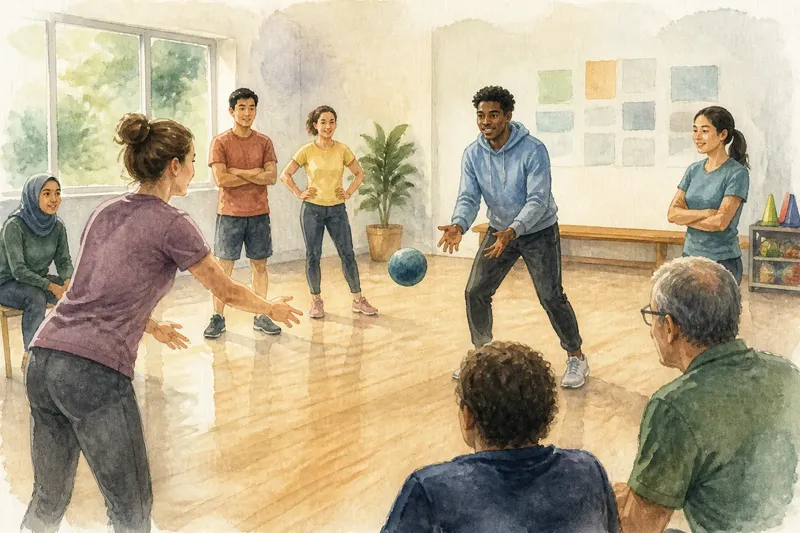
The ball rests between two people who have never played together. One glances around, waiting; another starts to move, then stops. A clear starting point for a new game can replace that pause with one visible action everyone understands.
That action might be a gentle opening pass, a roll across a marked line, or a simple invitation to begin. It does not decide the whole game. It gives the group a shared moment when watching turns into playing.
Uncertain beginnings
Experienced players often carry the start of a game in their habits. They know who serves, where to stand, whether the first move is contested, and what counts as a start. Newcomers cannot see those assumptions. They may be learning the rules while also trying to work out whether the game has begun.
That uncertainty affects more than confidence. If one person expects a whistle and another expects the ball to move, both can act reasonably and still collide in timing. Others may hang back, unsure whether moving early would interrupt play or break a rule.
A clearly defined first action answers a narrow but important question: “What happens now?” It need not explain every later decision. It gives the group a common cue that everyone can recognize.
Choose a beginning visible to the whole group, not just the person starting.
What a good start does
An effective opening action is easy to notice, simple to perform, and within reach of a newcomer’s current skills. A gentle pass fits many casual ball games because it shows movement, direction, and who is next without requiring a forceful serve.
The action also gives people an immediate role. The starter knows what to do; the receiver knows who is being invited into play; everyone else can see the game take shape. That small structure can make joining feel less like interrupting an activity already underway.
Clarity matters even when the action is familiar. “We’ll start with a pass” leaves questions: Who passes? To whom? From where? A short explanation can answer them without becoming a rules lecture: “I’ll roll it to Sam, and Sam’s first pass starts play.”
Use one sentence to name the action and the next player’s cue.
Choosing the first action
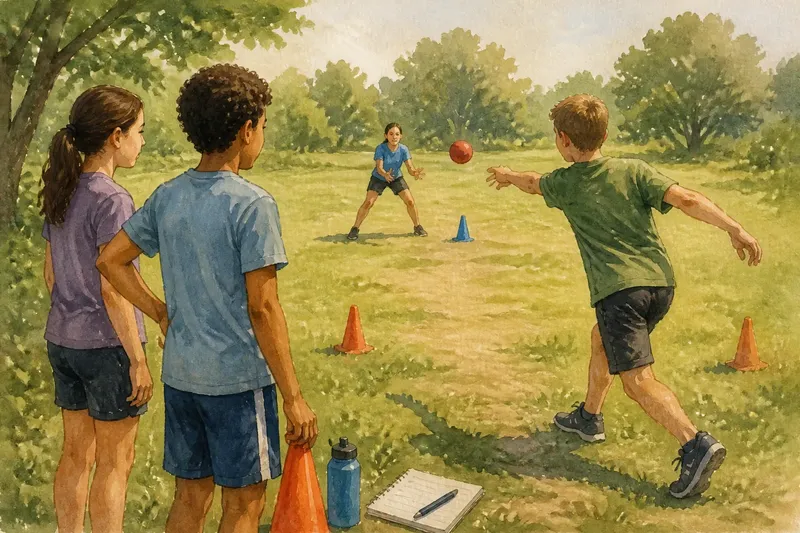
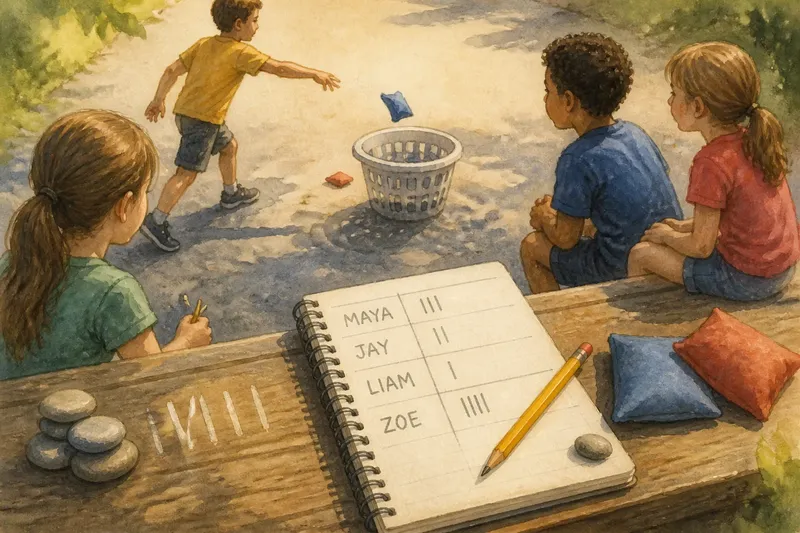
Start with the game’s basic movement. If players will pass a ball, open with a pass. If the activity involves tossing beanbags toward a target, a gentle first toss can mark the start. A movement game might begin when one player walks to a named spot and the others follow. The first action should belong to the game rather than feel like a separate ceremony.
Then consider what the group can comfortably do. A fast serve may be a poor opening for people still learning where to stand. A roll, underhand toss, or short pass can slow the first exchange and make its direction visible. The aim is not to remove the game’s challenge, but to keep the first moment easy to read.
Think about visibility, too. A quiet spoken cue can disappear in a noisy park, while briefly holding up a ball may be visible across the court. A whistle or clap might suit one setting and feel unnecessarily formal in another. Choose a signal that fits the space and the people present.
If someone cannot easily see, hear, or reach the usual starting action, offer a clear alternative. Pair a spoken cue with a visible hand signal, for instance, or move the starting position within the receiver’s reach. Ask what would make the start clear and comfortable instead of assuming one signal works for everyone.
Making the cue clear
A starting cue works best when it has one meaning. If “ready” sometimes means “take your places” and sometimes means “the game is live,” newcomers have to guess. Separate preparation from play: invite everyone to take a position, check that they are ready, then use the agreed action to begin.
Keep the wording plain. “When I roll the ball to Lee, Lee sends the first pass onward” is easier to follow than a string of game-specific terms. If the game has a boundary or starting spot, point to it while explaining. A gesture can carry information that would otherwise take several sentences.
There is no need to rehearse the opening repeatedly. Show the action once at an unhurried pace, then let the group begin. If someone misses the cue, pause and reset without treating the pause as a failure. The goal is a shared beginning, not a test of perfect attention.
Explain what the cue means before using it, then use it consistently.
Questions about starting play?
What if someone arrives after play begins?
Give the newcomer the same brief orientation as everyone else: explain the starting cue and the immediate next action. They can join at a natural pause, or the group can repeat the opening action if restarting is easy and welcome.
Does every game need a spoken signal?
No. A visible action may be enough when the group can see the starter and the action clearly marks play. Add a spoken cue when distance, noise, or a player’s needs make movement alone difficult to interpret.
What if the first action feels too formal?
Make it smaller, not less clear. A casual roll or a simple “ready?” followed by a pass can mark the beginning without adding ceremony or extra rules.
Should the opening action change for different players?
It can, as long as the group still recognizes what starts play. A shorter pass, a roll, or a different starting position may make participation easier while preserving the shared cue.
Adjusting without confusion
Adapt the opening when the original action creates a barrier. Keep the change narrow and explain its purpose in ordinary language. If the starter changes from a hard serve to a gentle toss, say that the toss begins the first exchange and the rest of the game follows its usual rules.
Say you are hosting an invented casual game of catch in a community room, and one newcomer is unsure whether to move before the group calls a start. You have a soft ball, a clear space, and Jordan standing within easy reach. Tell the group, “I’ll make one easy toss to Jordan; once Jordan catches it, we’re playing,” then toss gently. The expected result is a visible start and a clear first role for Jordan, without requiring anyone to infer when play begins.
In a noisy outdoor space, the same host could raise the ball, say the receiver’s name, and then toss. That combines a visible signal with a spoken cue. The useful choice depends on what the group can notice in that setting.
Keep the change small enough for newcomers to remember after one explanation.
After the first move
A clear start should lead into ordinary play without an awkward gap. If the opening pass goes to a particular player, make sure that person knows whether to pass, move, or choose what happens next. Otherwise, the starting cue may resolve one uncertainty only to create another immediately.
You do not need to explain every possible response in advance. Give players the next action they need, then let the game teach its broader pattern. If confusion appears, pause at a natural moment, clarify the rule, and repeat the starting signal only if the group needs a reset.
Notice the difference between an unfamiliar rule and an unclear start. A newcomer may understand that play has begun but still need help with a later choice. Treating both as one problem can lead to an overlong opening explanation. Keep the cue focused on beginning; answer other questions as they arise.
A small design choice
A starting point is a modest piece of game design: it connects the explanation to the first real action. For a new group, that connection can make participation easier because people do not have to guess when observation ends and play begins. It also gives an experienced player a simple way to welcome someone without reciting the whole rulebook.
Before the next game, decide who will make the first move, what that move will be, and how everyone else will recognize it. A clear starting point for a new game need not be elaborate. It needs to be visible, understandable, and ready to lead into the next play.