The Matching-Kit Myth: Why a Game Needs No Uniform
A game needs no uniform: use visible color, stable positions, or simple markers so players can identify teams without buying matching clothes.
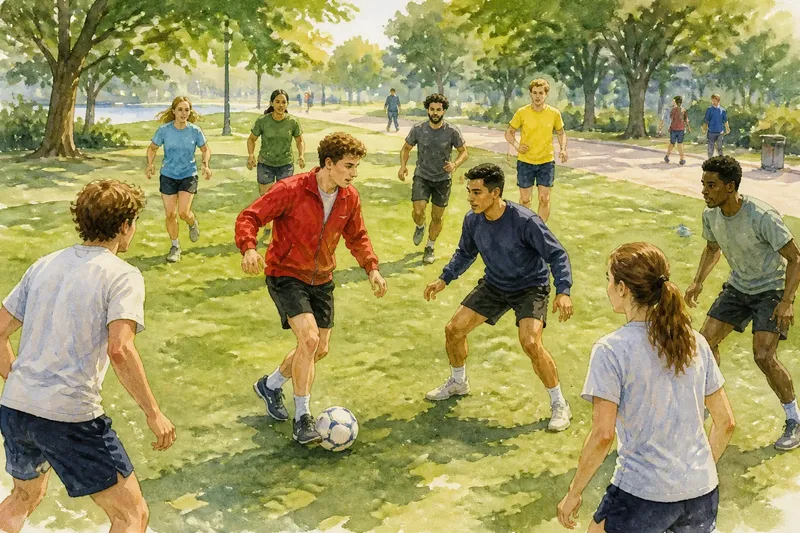
At the park, one player arrives in a red jacket, another in a navy sweatshirt, and a third has only a pale T-shirt to spare. The game can still begin: a game needs no uniform if everyone can tell who is playing with whom. Agree on a clear cue before the first pass, and team identity need not become a problem for the afternoon.
Start with visibility
Look at the playing space and the clothes people already have on. The useful question is not whether everyone looks alike, but whether players can recognize teammates during ordinary movement. A green shirt may stand out against a gym wall but blend into a leafy field; a bright top may be easy to see in shade and less distinct under indoor lighting.
Notice broad differences without inspecting anyone’s outfit or asking them to change. Choose two color families already represented, such as light and dark or warm and cool. If one team’s clothing varies, that is fine as long as the sides remain distinguishable.
Imagine a small gym where one side happens to wear mostly light tops and the other mostly dark ones. The organizer assigns the light-shirted players to one team and the dark-shirted players to the other, then asks whether anyone sees a confusing overlap. If two players are hard to distinguish, the group can add a second cue instead of delaying play to find different clothes.
Choose a team cue
Once you see what the clothing makes clear, agree on one cue and say it aloud. Keep it short enough to remember during play. With frequent substitutions, repeat the distinction to incoming players before they join.
- Color families: Check whether two broad color groups look distinct from across the playing area. If they do, assign one group to each team; if not, use position or a marker instead.
- Position: Check whether each team can keep a stable side, goal, basket, or direction of attack. If so, assign teams by that position; if sides change often, add a visual cue.
- Names or calls: Check whether players can hear and remember brief team names or calls during restarts. If they can, use the call as support; if noise or distance makes it unreliable, pair it with a visual distinction.
- Small markers: Check whether pinnies, fabric bands, or other suitable markers are available, visible, and comfortable. If they meet those conditions, assign them consistently; if not, choose another cue rather than asking someone to use an awkward item.
- Stable direction: Check whether the teams keep the same attacking direction for the round. If they do, tell everyone which end each team uses; if they swap ends, state whether team identity stays with the players or follows the space.
- Late arrivals: Check whether a substitute or newcomer can hear the rule before joining. If they can, repeat the cue at entry; if not, pause briefly and explain it before play resumes.
Use the least complicated cue that works. A game with two stable sides may need no clothing distinction; a game where players mingle or change direction may need a visible color cue.
Check difficult cases
Before play, consider anyone whose clothes do not fit the chosen color split. Do not leave a player hovering between teams because their outfit is patterned, neutral, or similar to both sides. Offer a choice of team, a suitable marker if available, or a role that fits the position system.
Account for distance, lighting, and differences in color perception. Two colors that look distinct up close may blur across a field, and players may perceive them differently. Pair color with another cue, such as which goal a team attacks, so identification does not depend on color alone.
Check that any marker stays in place and does not interfere with movement. Loose fabric, dangling ties, or objects carried in a hand can distract or snag. Follow the item’s instructions and any rules set by the facility or organizer.
What if colors overlap?
Can teams use light and dark?
Yes, if the contrast is easy to see in the playing space. Say the distinction aloud and check whether players can identify both sides from the places where they will usually look.
What if two players wear similar colors?
Keep the team assignments and add a second cue, such as a stable side, team name, or visible marker for the player who needs one. If a marker is unavailable or uncomfortable, identify teams by position instead; changing clothes is not the only solution.
Are pinnies necessary?
No. Pinnies can help when teams mingle or clothing offers little contrast, but they are optional. If you use them, check that they fit comfortably and do not restrict movement; otherwise, choose a different visible cue.
How should teams work for color-blind players?
Do not make color the only way to identify a side. Combine it with position, a team name, or another visible distinction, and ask the player which cue is easiest to follow.
Explain the rule
Give the group the team rule in one sentence, then invite a quick correction: “Blue and green are teams; blue attacks the tree end, green attacks the path end—does anyone have trouble telling those apart?” The question catches ambiguity while it is easy to fix and gives players a way to speak up without being singled out.
Make sure substitutes and late arrivals hear the same rule. If teams change sides at a break, say when that happens and whether the color assignment changes too. A cue that shifts without explanation can be more confusing than having no cue.
Keep the arrangement consistent within the round. If the group swaps a marker or revises an assignment, pause long enough for everyone to understand the change instead of expecting them to infer it from movement.
Adjust the cue
If the cue proves hard to follow, change the cue rather than treating the clothes as the problem. Choose a clearer contrast, assign teams by stable positions, or add available pinnies. Tell everyone what is changing and resume once both sides can identify one another.
Say a group starts with two color families but notices they look almost alike in a dim corner of the gym. They keep the players on their original teams, assign one side to the basket and the other to the door, and tell everyone those positions stay fixed for the round. The expected result is that players can identify teammates by side as well as clothing, even when the shirts are similar.
For the next round, decide whether the cue still fits. If players swap ends, clarify whether team identity stays with the players or follows the end of the space. That distinction prevents a routine change of direction from being mistaken for a team change.
Keep play welcoming
Uniforms can suit organized leagues or events with specific rules, but casual play does not need to imitate them. Requiring matching clothes may add preparation, expense, or an awkward reason for someone to sit out. A shared cue lets the group focus on playing.
Make participation the standard and clothing an optional aid. The best team distinction is one players can recognize comfortably, explain to someone joining late, and adjust when the setting calls for it. A game needs no uniform when a clear agreement does the work.
Before people leave, return borrowed markers to the shared gear so they are available for another game without becoming a condition of entry.